
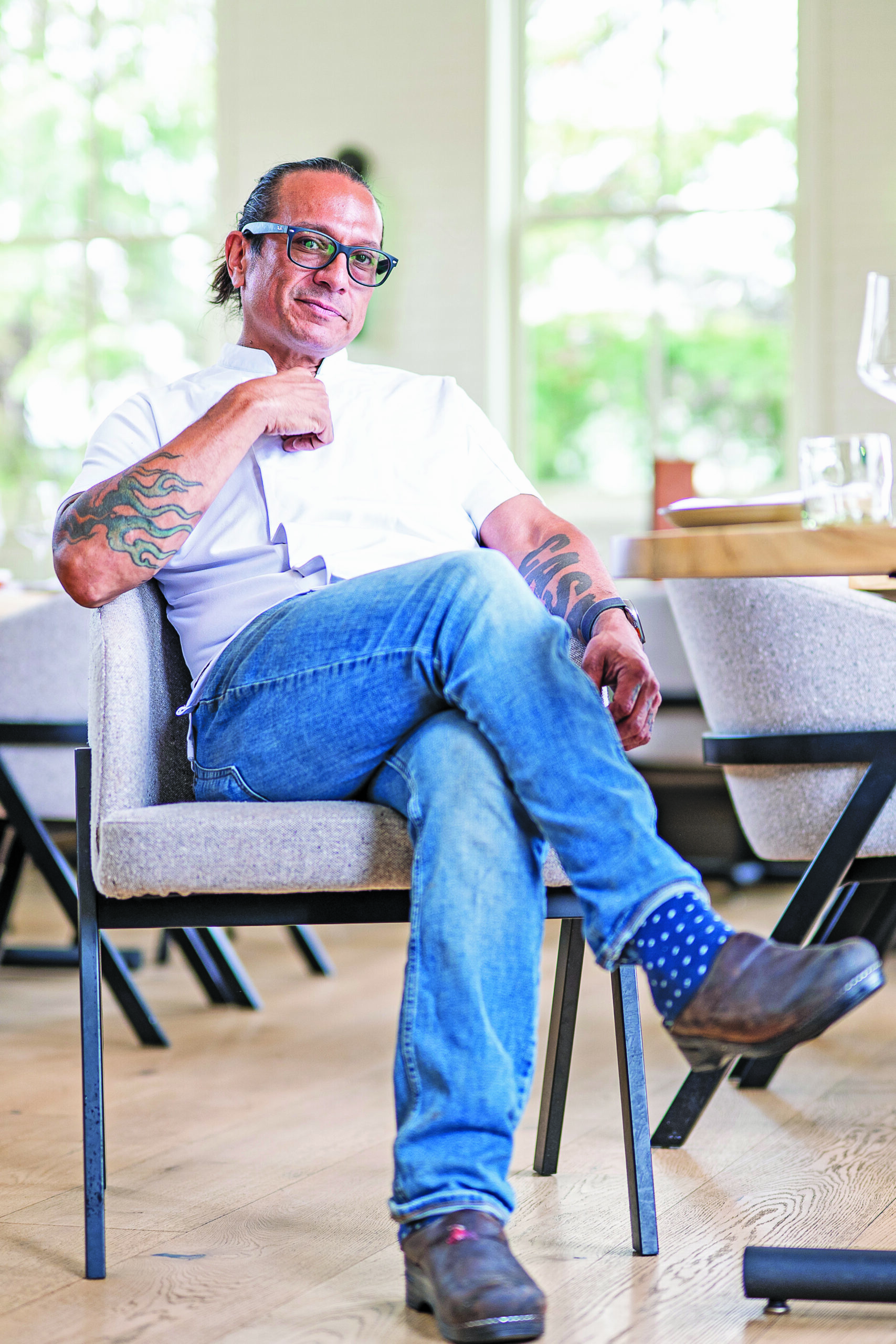
In the Kitchen with Anthony Nelson
By Dawne Belloise
Arriving just before the big Covid shutdown in Crested Butte, Anthony Nelson got his new chef job at 9380, the former restaurant at the Elevation Hotel in Mt. Crested Butte. It was February of 2020 and three weeks later, he found himself here with his chef job on temporary hold, but he feels it was the best thing that could have happened for him. Anthony knew that position was essentially his foot in the door to the town he wanted to make his home, and after some adventures and comings and goings, he is now the chef at Two Twelve on Elk Avenue, one of town’s newest eateries.
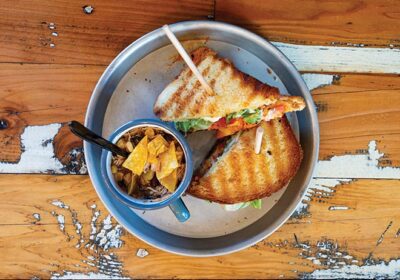
Having worked in a variety of different kitchens, Anthony says he finds his voice is based in seasonal and regional cuisine. “Using the guidelines of what is available seasonally, I like to pull from my repertoire of cuisines,” he says, creating what he calls elevated comfort food. “It’s accessible and something people can understand. Every cuisine can bring a certain comfort level that you don’t really think about because they’re different cuisines. There’s something about making dashi and miso soup that’s as comforting as chicken noodle soup. They can all live on the same page.”
Anthony says, “The great thing about seasonal and regional cooking is that it sets the parameters of product and ingredients, and once you understand the parameters you can do anything within them. It kind of pushes you to be more creative. It’s most exciting figuring out because it’s about life and life is about change and progression. One of the interesting things I heard from guests is that because we utilize product from our region, it tastes like cuisine at 9,000 feet, it tastes like Crested Butte in the summer.”
Anthony has perused the old cookbooks from Crested Butte’s mining families who brought their family favorite ethnic recipes with them. Those books are at the Crested Butte Museum’s shop. “It’s interesting to see what they cooked and used. They had to utilize what was here and in the now. It’s interesting to see the evolution. The trend is heading back to more rustic and primal ways of doing things, seasonal regional cooking,” he explains.
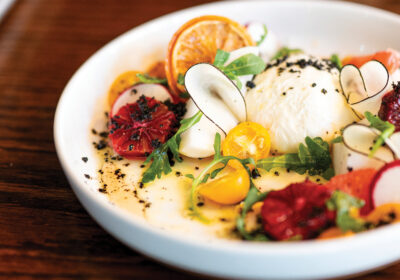
Anthony tells that his regional sources are supplied by Farm Runners, “A group that goes to the small farms on the Western Slope to pick up the produce to deliver to our valley and throughout the Western Slope. That’s our pipeline to all of the produce.” In addition to the variety of regionally sourced meats, his menu for these snowy, frigid winter days will include root vegetables like beets, “Which will be hearth roasted and with a little arugula and pickled ramps. The ramps are completely 100% wild.” Harvested in May, Anthony pickles the ramps for his winter menu, doing his own preservation of some of the produce to keep it through the long winter months. “Preservation and fermentation are two big keys in creating our own flavor,” he says and adds that many in the industry are returning to these methods. “If you think about it, it’s full circle as we use live fire and preservation methods more intensely than before in the industry. I think America has always been into the newer, shiny thing and as a culture we embrace technology full-on. But cooking on a live fire is rustic and all these other countries have been cooking over live fire for centuries,” he says, and feels that the flavor a live fire creates stands out so much more.
Anthony intends to make his menu even more interesting this year, adding many dishes for vegan inclusiveness. “We’ll take it in a direction that people might not think about. For instance, people don’t think of an onion as something you can celebrate but I’m going to do a hearth roasted onion dip,” he says. Other side dishes he’s planning include a hearty mushroom soup, a roasted winter squash and kale gratin with a raclette. “It’s a really nice, creamy cheese with a little bit of funk in it, just enough to make it really interesting,” he explains.
Anthony considers the diversity of immigrants in the development of America’s cuisine. “I think back to the whole idea of the cultural melting pot, we all use the same ingredients but in different ways. I think about Anthony Bourdain traveling around the world and eating different cuisines and how that breaks down the barriers of cultural understanding.” Anthony describes an Italian dish he plans to include, a pork cheek sugo, “Which is a ragu served on a pasta. It’s hearty and when it’s 10 degrees below zero out you want something hearty.”
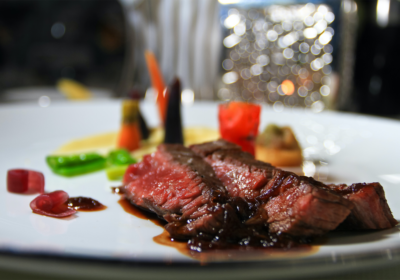
With its open kitchen and hearth, the patrons of Two Twelve get to watch the show as giant tomahawk steaks and meats sizzle over the open fire. “I like to work the hearth myself. We have people come up all the time who are excited about the fire char on their food,” he says of the robust flavor imparted as at least a hint in everything.
Anthony’s culinary expertise comes from extensive and diverse experiences, as well as education at the prestigious Culinary Institute of America (CIA) in upstate New York. He came to Crested Butte after spending four years in Virginia at his friend’s restaurant. He had been interviewing at several different Colorado mountain towns, and had never been to CB. Driving in from Denver, he recalls discovering “this adorable little town at the end of the road and I fell in love with it.” As much as Anthony adored Crested Butte, he first tried Aspen for the experience at the Little Nell, a well-known hospitality icon in Colorado. As the hotel tournant, he did banquettes, production, and generally made things happen, but quickly realized Aspen was never going to feel like home. “Here, I sit on a bench in CB and within five minutes 10 people I know walk by.”
Anthony grew up on a large, family cattle ranch in Yuma, Colorado, where they had 700 head of cattle and grew potatoes, hay, pinto beans, and corn. As a ranch kid, he fixed fences, hauled hay bales, and bottle-fed calves. “Looking at it now, I’m hugely grateful that’s how I was raised, understanding where food and animals come together.” He smiles of the approach to work. “It’s not an eight-hour day, it’s however long it takes to get what needs to be accomplished done.” Anthony has carried that work ethic with him throughout life.
After graduating from Evergreen State College in Olympia, Washington, Anthony moved to New Orleans, fell in love with the city and first began cooking in bars.
He enrolled at the Culinary Institute of America and graduated in 2004 then returned to New Orleans to intern at Restaurant August, learning high end southern creole cuisine, before heading off to Las Vegas where he cooked at Nobu. “I started as a tempura fry guy and by my last year there, I was doing the Omakase menu, which is the chef tasting menu.”
Anthony spent time at a little wine bar in Sebastopol, California and then in Nashville rolling sushi as well, moving around to spend time in different restaurants and learn from a variety of chefs. “You move on to learn more until ultimately, it feeds into guiding your palette, which is always changing to what you want to express.”
Anthony spent four years as executive chef for the regional and seasonal farm-to-table restaurant Field and Main in Marshall, Virginia, sourcing products and meat from small, nearby farms in a rural area and featuring wine-paired dinners.
After his initial Covid-era introduction to CB, Anthony returned in 2022 and when he heard that local enterprising entrepreneur Kyleena Falzone was opening a restaurant with Jeff Hermanson called Two Twelve. He told them he wanted to be part of the team. They opened July 2024 and Anthony feels, “I have a really amazing team and a really good flow in the kitchen. We have elements of fire in almost every dish. Kyleena is really inspiring and the one who had that drive and push.”
Anthony has had a personal journey in changing his lifestyle to be healthier. He recalls that in 2017 he was 350 pounds, and has since lost almost 200 pounds and celebrated five years sober. “In this industry, there’s the gluttony of food, drugs and alcohol which has damaged and derailed a lot of careers. I wanted to become my best self,” he says. He cooks what he preaches as many of his dishes are gluten free, vegan and vegetarian, emphasizing clean food. “In general, a different paradigm of how health and food relate and are intertwined and how it can be done by using seasonal regional products to create something that is nourishing as well as exciting for people.”
He says of CB, “This is my comfort place, my place of solace, being surrounded by mountains, the beauty of mother nature and the harsh intensity of it. It’s perfect and it’s real to me. Everything about moving here and being here has been life changing. I live in gratitude for where I’m at.”
Related Posts